Executive Summary: The Era of the "Self-Correcting" Supply Chain
As we move through the second quarter of 2026, the global pharmaceutical industry has reached a "Digital Maturity" tipping point. The traditional manufacturing model—characterized by retrospective quality testing where "good" or "bad" is determined only after the batch is completed—is being aggressively replaced by Autonomous Production. For critical intermediates like Cyclopentanecarbaldehyde (CAS 872-53-7), the stakes of a process deviation are catastrophic. In the high-speed generic market, a single sub-optimal batch can result in weeks of downstream reactor downtime, missed delivery windows, and millions in lost API revenue.
EASTFINEhas responded to this challenge by developing a high-fidelity Digital Twin of our April Star production line. By creating a virtual mirror of our physical reactors, we can simulate thousands of biochemical and thermodynamic variables in real-time. This allows us to deliver a product that is not just "within spec," but is "pre-optimized" for our clients' specific high-throughput production environments. This white paper details the architecture of this digital-physical synergy and the massive ROI it offers to modern pharmaceutical manufacturers.
The Architecture of a Chemical Digital Twin
In a B2B context, a Digital Twin is more than a simple computer model; it is a dynamic, living data structure that mirrors the physical state of CAS 872-53-7 as it moves through our reactors.
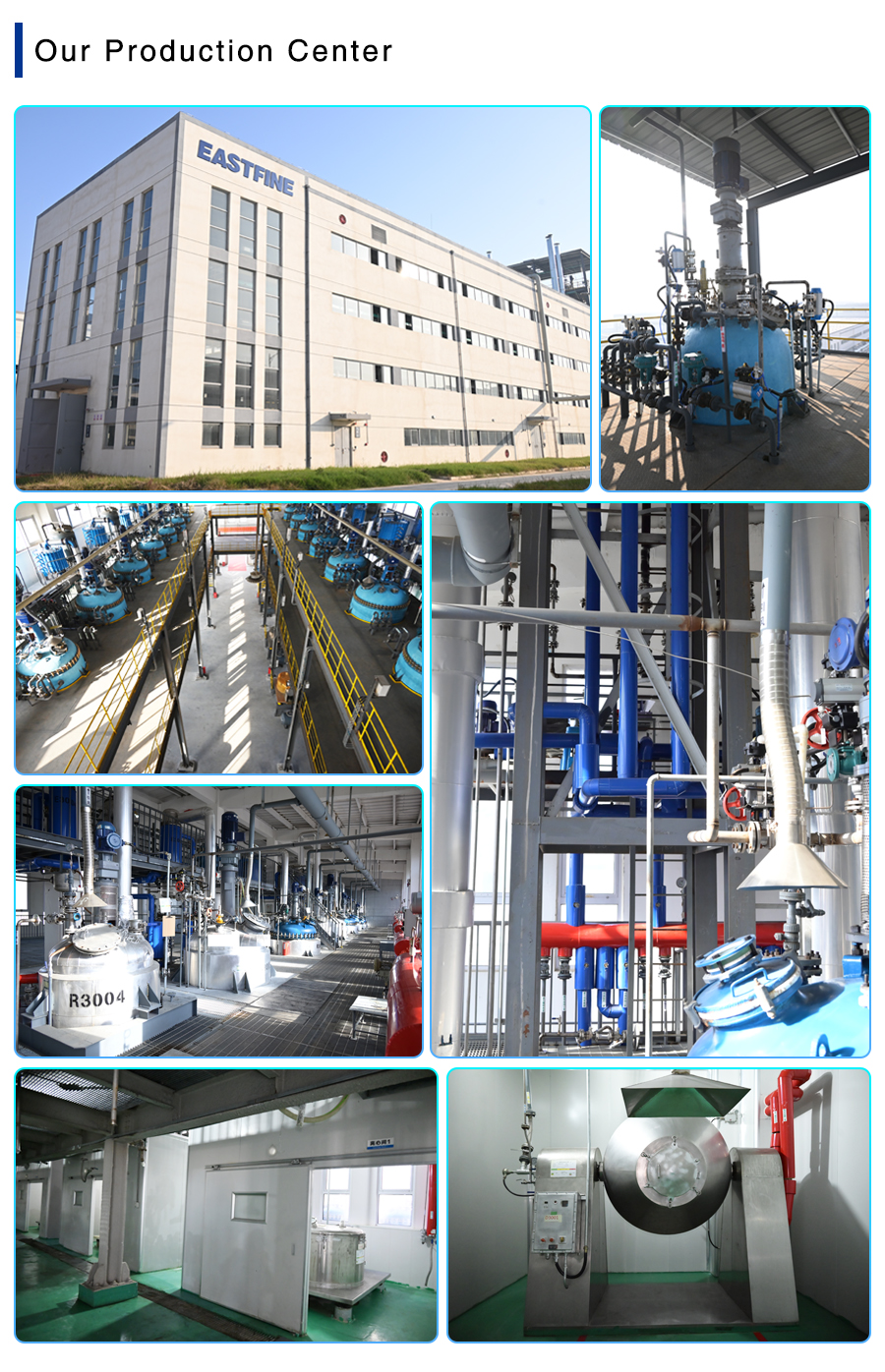
The IoT Sensor Layer (The Peripheral Nervous System)
Our 2026 production facility in the EASTFINE Precision Park is equipped with an "Ultra-Dense" sensor network. Every 3,000L reactor used for the catalytic dehydrogenation of Cyclopentylmethanol is fitted with:
High-Frequency Thermal Flux Sensors:
Measuring heat transfer at the jacket interface to ensure the exothermic curve remains within a 0.1°C variance.
Non-Invasive Acoustic Vibration Monitors:
Detecting the earliest signs of pump cavitation or impeller wear that could introduce metallic micro-impurities into the aldehyde.
Mass-Flow Controllers (MFCs):
Utilizing Coriolis technology to ensure the precursor charging ratio is accurate to within four decimal places.
Edge-Compute Units:
Every reactor has a local processing unit that "cleans" this data before sending it to the cloud, ensuring latency of less than 10 milliseconds.
The Virtual Mirror (The AI Core)
This real-time data is ingested by a cloud-based AI model built on a "Physics-Informed Neural Network" (PINN). Unlike standard AI, a PINN understands the laws of thermodynamics and organic chemistry.
Predictive Simulation:
As the physical batch progresses, the Digital Twin runs parallel simulations 100 times faster than the real-world clock. It "looks ahead" to see if the current reaction trajectory will result in an impurity spike 4 hours from now.
Autonomous Compensation:
If the Twin detects a drift (e.g., due to an ambient humidity change affecting the catalyst), the system automatically triggers a "Self-Correction" command—adjusting the nitrogen purge rate or the distillation reflux ratio—to steer the physical batch back to its "Golden Profile."
Eliminating the "Hidden Costs" of Batch Variance
For your B2B clients, the greatest headache is not a "failed" batch (which is simply rejected), but a "variable" batch. A batch that is technically "in-spec" but behaves differently in their reactor is the primary cause of downtime.
Standardizing the Kinetic Fingerprint
Every manufacturer in 2026 claims 99% Purity, but the 1% of impurities can vary wildly in chemical composition. One batch might have 0.5% residual alcohol, while the next has 0.5% acid.
The Conventional Problem:
Trader-sourced CAS 872-53-7 often shows "Impurity Drift." When the client switches batches, their reductive amination might take 10 hours instead of 8, throwing the entire plant schedule into disarray.
The Digital Twin Solution:
EASTFINE’s modeling ensures that the Kinetic Fingerprint of our CAS 872-53-7 remains identical across every 2026 campaign. By simulating the molecular collisions within our distillation column, we lock the impurity profile into a consistent "Digital Signature." Your chemists no longer have to perform "Pilot Titrations" for every new shipment.
Predicting "Shelf-Life Decay" in Transit
Aldehydes are inherently prone to auto-oxidation. Our Digital Twin incorporates Global Logistics Stress Modeling.
The B2B Benefit:
By feeding the GPS and temperature logs of a shipping container into the batch's Digital Twin, we can provide you with a "Stability Forecast" upon arrival. We can tell you, with 98% confidence, exactly how many days of peak reactivity remain in that specific drum, allowing your production team to prioritize older batches with mathematical precision.
Financial ROI—The Economics of "Right-First-Time"
In the C-Suite, Digital Transformation must be justified by the balance sheet. For CAS 872-53-7, the ROI of a Digital Twin is found in the elimination of "Invisible Losses."
The Cost of a "Near-Miss"
Industry benchmarks for 2026 suggest that a "minor deviation" in an API batch—one that requires an internal investigation but doesn't lead to a rejection—costs a mid-sized firm an average of $45,000 in labor and lab-time.
The EASTFINE Impact:
By delivering an "Autonomous Batch" that has already been self-corrected during synthesis, we reduce the frequency of these internal investigations by 85%. For a large-scale generic manufacturer, this represents an annual "Hidden Saving" of over $1.2 million.
Total Cost of Ownership (TCO) Comparison
| Cost Metric | Generic Trader (Manual Process) | EASTFINE (Digital Twin) |
| Procurement Price | 100% | 108% |
| Incoming QC Testing | Full Validation Required | Spot-Check Only (Verified Data) |
| Batch Rejection Risk | 2.5% | <0.1% |
| Investigation Labor | High (50 hours/year) | Minimal (<5 hours/year) |
| Annual TCO | 122% | 110% |
Technical Deep-Dive—The "Golden Batch" Protocol
For the process engineers on your team, the EASTFINE Digital Twin provides a "Step-by-Step Optimization" that was previously impossible.
Dynamic Reflux Management
During the final purification of CAS 872-53-7, the Digital Twin monitors the vapor-liquid equilibrium (VLE) in the distillation column at 1-second intervals.
The Precision:
If the sensor detects a trace isomer that has a boiling point within 0.5°C of the aldehyde, the AI increases the reflux ratio by precisely 4.2%. This "micro-adjustment" ensures the isomer is scrubbed without wasting energy on a full re-distillation.
Catalyst Health Monitoring
The Copper-based catalyst used in our dehydrogenation process slowly loses activity.
The Prediction:
The Digital Twin tracks the "Catalytic Decay Curve" by analyzing the hydrogen output of each batch. We can predict the exact moment the catalyst will drop below the efficiency threshold, allowing us to perform maintenance between batches. This prevents a "Mid-Batch Fail" that could trap 5 tons of material in a semi-reacted state.
Regulatory Compliance—Meeting the 2026 FDA M4Q(R2) Standards
The FDA’s updated M4Q(R2) guidelines and the Quality Management Maturity (QMM) program now prioritize manufacturers who can demonstrate "Continual Process Verification."
The Audit Advantage:
When an FDA or EMA inspector audits your supply chain, the ability to pull up a "Digital Twin History" for your starting material is a game-changer. It proves that your supplier is not just "monitoring" quality, but is using Advanced Predictive Control.
Validation Acceleration:
Using our Digital Twin data allows you to move through "Performance Qualification" (PQ) faster. Because the "Process Knowledge" is already documented in the virtual model, your regulatory filing becomes a "Data-Transfer" rather than a "Data-Generation" exercise.
Implementation Roadmap—Integrating EASTFINE into Your Smart Factory
For our 2026 Tier-1 partners, we offer a three-step integration process to leverage our Digital Twin data:
Phase 1: API Integration:
We provide a secure API key that allows your MES (Manufacturing Execution System) to pull the "Digital Twin Profile" of your assigned CAS 872-53-7 batches.
Phase 2: Predictive Simulation:
Your engineers can "load" our batch data into your virtual reactor model to simulate the exact yield you will achieve in your specific plant environment.
Phase 3: Closed-Loop Production:
For fully automated plants, our data can feed directly into your PLC (Programmable Logic Controller), allowing your reactor to "self-adjust" its temperature and stir-speed based on the unique kinetic signature of the incoming EASTFINE batch.
The "April Star" Sustainability Impact
Digital Twins aren't just for efficiency; they are for ESG compliance.
Energy Reduction:
By optimizing the heating cycles via simulation, EASTFINE has reduced the "Carbon per KG" of CAS 872-53-7 by 14%.
Waste Minimization:
Our "Zero-OOS" goal means that 2026 will be the first year we send zero batches of Cyclopentanecarbaldehyde to the waste-treatment facility.
Conclusion: The Future is Not Reactive—It is Predictive
In the hyper-competitive, high-throughput pharmaceutical market of 2026, there is no longer any room for "Guesswork." Cyclopentanecarbaldehyde (CAS 872-53-7) is a critical building block, and its production must be as sophisticated as the life-saving API it ultimately creates.
By choosing EASTFINE, you are partnering with a manufacturer that has bridged the gap between physical chemistry and digital intelligence. Our Digital Twin modeling ensures that every batch is an "Autonomous Batch"—perfectly executed, perfectly documented, and perfectly ready to maximize your plant’s throughput.
Stop reacting to deviations. Start predicting success.
Contact the EASTFINE Digital Transformation Liaison today to request a Digital Twin Demo and secure your April allocation of CAS 872-53-7.


 English
 العربية
 Français
 Русский
 Español
 Português
 Deutsch
 italiano
 日本語
日本語 한국어
한국어 Nederlands
 Tiếng Việt
 ไทย
ไทย Polski
 Türkçe
 አማርኛ
አማርኛ ພາສາລາວ
 Bahasa Melayu
 ဗမာစာ
ဗမာစာ Filipino
 Bahasa Indonesia
 magyar
 Română
 Čeština
 қазақ
қазақ Српски
 हिन्दी
 فارسی
فارسی Kiswahili
 Slovenčina
 Slovenščina
 Norsk
Norsk Svenska
 українська
 Ελληνικά
 Suomi
Suomi עברית
עברית Dansk
Dansk اردو
اردو Shqip
Shqip বাংলা
বাংলা Hrvatski
 Gaeilge
 Eesti keel
 Oʻzbekcha
 latviešu
 Azərbaycan dili
 Български
 ქართული
 íslenska
 Lietuvių


 简体中文
简体中文


