Introduction: The Interfacial Bottlenecks in Fine Chemical Scale-Up
When executing large-scale chemical manufacturing campaigns, the performance of a multi-phase reaction is rarely governed by chemical kinetics alone. In multi-component or biphasic liquid-liquid systems, the rate of target molecule conversion is heavily dependent on mass transfer across boundaries. When a hydrophobic organic intermediate must react with a hydrophilic or water-soluble nucleophile, the chemical transformation takes place within a narrow boundary layer located at the phase interface.
For process engineering teams utilizing (Bromomethyl)cyclopropane (BMCP, CAS 7051-34-5), optimizing this phase boundary is a primary operational priority. BMCP is a highly valued alkylating agent used to install the rigid, compact cyclopropylmethyl framework into small-molecule drug architectures and specialized agricultural chemicals.
However, because BMCP is highly hydrophobic and virtually insoluble in water, its industrial alkylation mechanisms often require heterogeneous liquid-liquid or liquid-solid conditions supported by phase-transfer catalysts.
In these dispersed emulsion environments, trace chemical variations can dramatically alter fluid physics, droplet coalescence rates, and interfacial tension. If the raw material contains unmonitored impurities, these components can act as uncontrolled surfactants or passivating barriers at the liquid interface. This disruption alters mass transfer coefficients and causes extended batch processing times or unexpected ring-opening cascades.
At EASTFINE, we eliminate these multi-phase processing risks by manufacturing CAS 7051-34-5 with exceptional chemical uniformity and controlled impurity baselines. This degree of quality allows downstream engineers to accurately model phase dispersion kinetics, establish uniform droplet surface areas, and ensure consistent mass transfer rates across all production batches.
Applications of CAS 7051-34-5: Building High-Performance Lifescience Scaffolds
The highly controlled phase dynamics enabled by premium-grade (Bromomethyl)cyclopropane are essential for the commercial scale-up of modern clinical therapeutics:
Advanced Antiplatelet Blockbusters
The highest volume application of BMCP is in the commercial synthesis of Prasugrel, a critical thienopyridine antiplatelet agent prescribed to mitigate thrombotic events in acute coronary syndrome pipelines. Achieving regular, predictable interfacial mass transfer during the bulk alkylation stage is critical for meeting global regulatory purity requirements.
Target-Specific Neurological Ion Channel Regulators
In the neuro-therapeutics pipeline, BMCP serves as a vital intermediate for synthesizing selective KCNQ2/3 potassium channel openers designed to manage treatment-resistant epilepsy. The strict spatial configuration of the three-membered carbon ring must be fully preserved during phase dispersion processing to prevent inactive structural isomers from diluting the active API.
High-Potency Payloads for Next-Generation ADCs
BMCP is a core structural element utilized to construct targeted human dihydroorotate dehydrogenase (DHODH) inhibitors based on complex azole chemistries. These molecules function as specialized cytotoxic payloads for third-generation Antibody-Drug Conjugates (ADCs), an area where trace intermediate variations can severely compromise final drug conjugation efficiencies.
Advantages of Optimizing Interfacial Area over Extended Batch Residence Times
Prioritizing boundary-layer mass transfer control brings significant competitive benefits to commercial chemical synthesis over old-fashioned, long-cycle batch heating:
Shorter Exposure to Degradation-Inducing Aqueous Environments
Extended residence times in biphasic systems expose the sensitive cyclopropylmethyl system to prolonged hydrolysis or moisture-induced ring-expansion reactions. By maximizing the specific interfacial area, the target alkylation proceeds rapidly to completion, minimizing the exposure time of the intermediate to degrading aqueous environments.
Significant Reduction in Phase-Transfer Catalyst Loadings
When the physical dispersion of the reaction mixture is fully optimized, the contact efficiency between the organic droplets and the phase-transfer catalyst (QPTC) is maximized. This high contact efficiency allows manufacturing teams to significantly lower total catalyst loadings, reducing production costs and simplifying subsequent downstream purification steps.
Predictable and Clean Liquid-Phase Separation Profiles
Intermediates with unstable chemical baselines often form stubborn, unseparable emulsions during final aqueous wash cycles, which leads to major material loss. Using an intermediate free of trace polymeric or surface-active side products guarantees rapid, clean phase separation, protecting yield retention and increasing overall facility throughput.
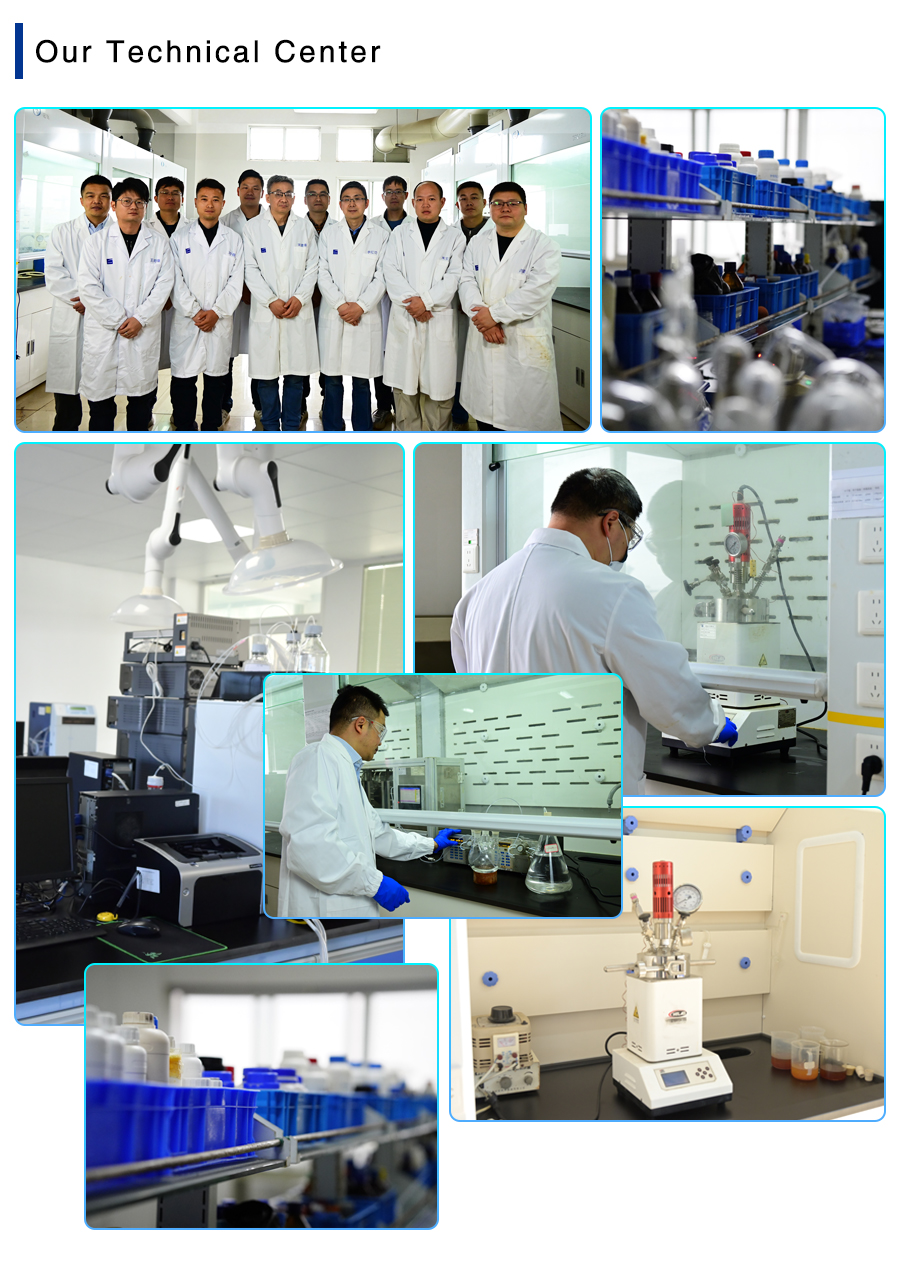
Biomechanics & Interface Physics of Biphasic Alkylations
Controlling a commercial scale-up requires a detailed understanding of the physical and chemical forces that operate within the fluid boundary layer during multi-phase reactions.
The Desired Interfacial Substitution Pathway:
In an optimized phase-transfer system, the water-soluble nucleophile forms an ion pair with the lipophilic catalyst at the boundary layer. This complex then migrates into the organic phase droplets containing BMCP, where a clean, second-order nucleophilic substitution (SN2) takes place. This route preserves the high-strain three-membered ring and avoids the formation of free, unstable carbocation intermediates.
The Interfacial Passivation Risk:
If the raw material contains trace amounts of polar impurities or acidic byproducts from early hydrolysis, these molecules assemble directly at the liquid-liquid phase boundary. This gathering creates a dense, passivating layer that increases interfacial viscosity and limits the physical diffusion of the ion pair, causing the reaction rate to stall and forcing operators to apply excessive heat that triggers ring-opening cascades.
By supplying an intermediate completely free of trace surface-active byproducts, EASTFINE ensures that the boundary layer remains fully accessible, allowing the ion pair to diffuse rapidly and uniformly into the organic phase.
Process Engineering of Dispersion Fields
Achieving high mass transfer rates in large-scale heterogeneous systems requires precise management of reactor geometries, agitation energy dissipation, and droplet size distributions:
Calculation of Specific Interfacial Area Limits
Process engineers must design the mixing configuration to achieve a target specific interfacial area (a), defined as the total droplet surface area divided by the volume of the mixture. This calculation determines the minimum agitation energy needed to maintain a highly active macro-emulsion without causing mechanical damage to glass-lined equipment.
Optimization of Droplet Size Distribution via High-Shear Agitation
To establish a regular droplet size distribution (d32 Sauter mean diameter), production vessels utilize multi-stage axial flow impellers combined with precisely calibrated wall baffles. This engineering design creates uniform turbulence throughout the tank, preventing the formation of large organic pockets and ensuring a constant mass transfer rate across the entire liquid volume.
Automated Phase Ratio Control and Dosing Sequences
Modern production lines control phase ratios by utilizing automated mass-flow meters integrated into the distributed control system (DCS). The system monitors the organic-to-aqueous volumetric ratio in real time, dosing liquid BMCP at a rate that matches the calculated consumption velocity, keeping the emulsion structure stable throughout the reaction cycle.
Phase Separation, Emulsion Breaking, and Wash Kinetics
Following completion of the alkylation reaction, the heterogeneous mixture must be processed through precise separation and extraction steps to ensure maximum yield isolation:
Managed Coalescence and Temperature-Induced Settling
The completed reaction mixture is passed into a automated separation vessel where the internal temperature is adjusted to optimize fluid density differentials. This temperature adjustments accelerates droplet coalescence, allowing the aqueous phase and the organic product layer to separate into distinct zones without forming stable rag layers.
Coalescence-Assisted Centrifugal Phase Extraction
For high-throughput campaigns, the separated organic mass is directed through continuous centrifugal extractors. The high centrifugal force fields break down any remaining micro-emulsions, stripping out trace inorganic salts and catalyst residues while delivering a dry, pure organic stream ready for final crystallization.
Automated Waste Water Pre-Treatment and Eco-Compliance
The isolated aqueous stream, containing spent phase-transfer catalysts and inorganic bromide salts, is piped directly to an automated wastewater processing module. The waste stream undergoes chemical oxidation and advanced flocculation to recover or destroy organic residues, ensuring that the final discharge complies with strict global environmental health and safety (EHS) standards.
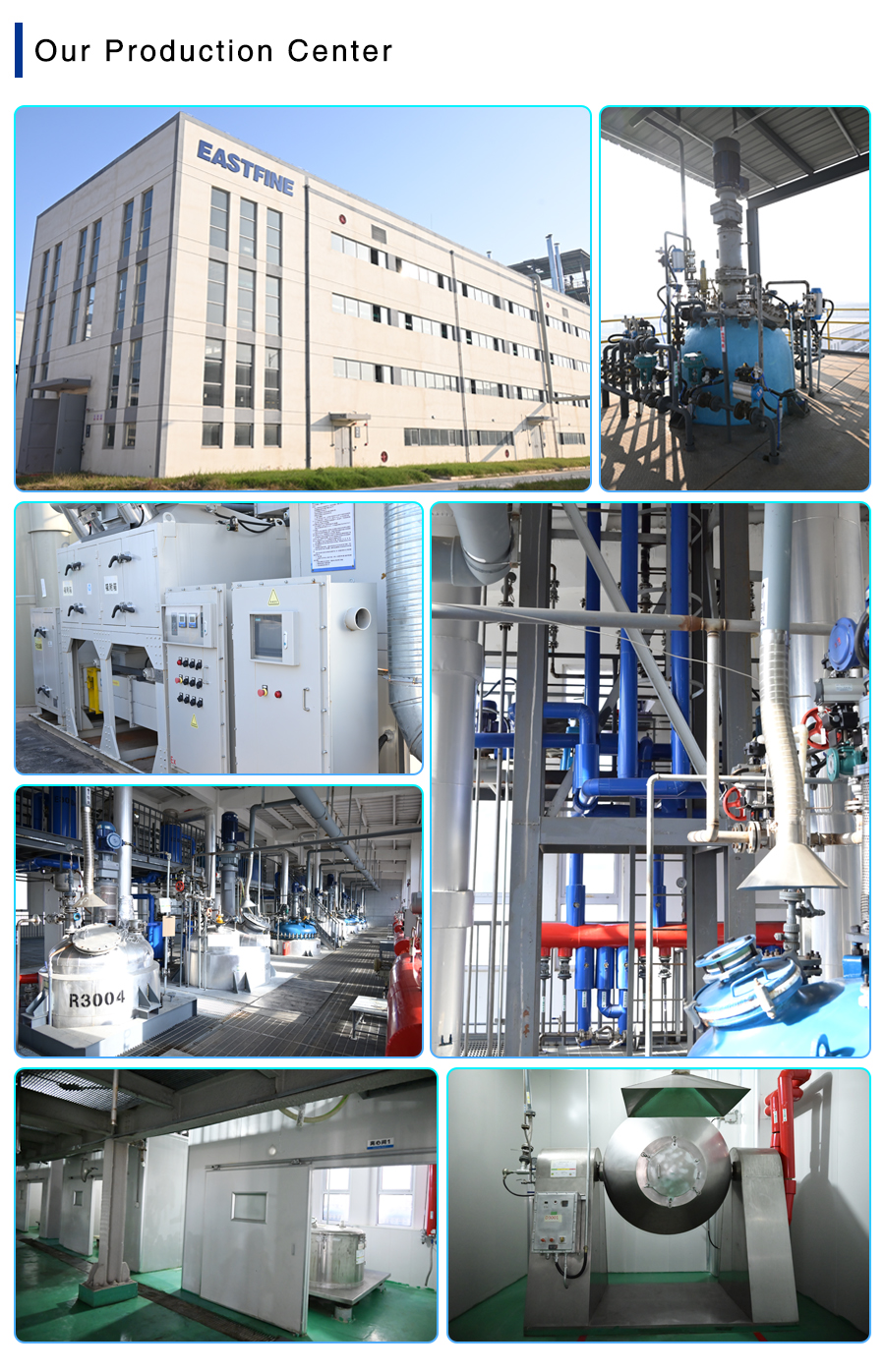
Comparative Interface and Mass Transfer Metrics of Material Quality
To assist process development specialists and scale-up engineers during material qualification and kinetic modeling, our quality control departments maintain a validation matrix tracking core interface parameters.
| Dispersion and Mass Transfer Parameter | Commodity Trading Grade BMCP | EASTFINE Ultra-Pure Grade BMCP | Downstream Commercial Operational Impact |
| Interfacial Tension Baseline | Erratic and batch-variable due to trace acids | Stable and consistent (± 1.5% variation) | Guarantees reproducible droplet sizes and reliable batch-to-batch processing times. |
| Rag Layer Formation Propensity | High risk (extended phase separation delays) | Non-Existent (clean, rapid separation) | Eliminates line blockages, simplifies washing, and maximizes intermediate recovery. |
| Mass Transfer Coefficient (kL) | Depressed due to boundary passivation layers | Optimized and highly predictable | Accelerates reaction velocities, minimizing total cycle time in production reactors. |
| Phase-Transfer Catalyst Stability | Accelerated breakdown from trace halogen acidity | Maximum catalyst operational lifetime | Lowers overall manufacturing costs by reducing raw catalyst consumption metrics. |
Advanced Film Dynamics and Droplet Coalescence Engineering
Maximizing chemical output in multi-phase reaction networks requires detailed management of fluid film behavior at the microscopic droplet boundary.
Mitigating Droplet Coalescence Barriers via Surfactant Elimination
During liquid-liquid alkylation, organic droplets constantly collide and reform, a dynamic process that refreshes the available reaction interface.
The Risk of Film Drainage Passivation
If the intermediate contains trace surface-active impurities, these elements accumulate inside the thin liquid film that separates colliding droplets. This accumulation blocks film drainage, preventing droplets from coalescing and creating a stagnant, overly stable emulsion that limits mass transfer and leads to localized product degradation.
Engineering Uniform Interfacial Renewal Rates
EASTFINE solves this film dynamic challenge through advanced purification methods that completely remove trace surfactants and polar impurities from our CAS 7051-34-5. This clean profile allows for natural, unhindered droplet interaction and high interfacial renewal rates, enabling the reaction to proceed smoothly at lower operating temperatures.
Controlling Mass Transfer Resistance across Complex Phase Borders
Managing the resistance to chemical diffusion across liquid borders is critical for achieving high product yields at commercial scale.
The Threat of Localized Reagent Accumulation
In fast, high-volume reactions, if the phase-transfer catalyst moves across the boundary layer significantly faster than the intermediate can dissolve, an imbalance in local stoichiometry occurs. This accumulation creates highly reactive pockets that can trigger the sudden ring opening of BMCP into linear side products.
Precision Phase Balance Architecture
Our process engineering specialists recommend utilizing real-time, inline particle-size tracking systems combined with automated agitation adjustments. By tuning the impeller rotation speeds based on real-time droplet surface readings, the mass transfer resistance can be balanced perfectly, ensuring high yield and pristine product quality throughout the entire manufacturing run.
Why Choose EASTFINE? Your Partner for Advanced Commercial Scale-Up
When a high-value active pharmaceutical ingredient or advanced agrochemical candidate advances to large-scale commercial production, choosing a technically reliable chemical partner is essential. Established in 1995, EASTFINE is a leading global direct manufacturer of high-purity (Bromomethyl)cyclopropane.

Technical Innovation Anchored by Doctoral R&D Teams
Our chemical pathways and stabilization profiles are designed and constantly optimized by a corporate R&D department led by industrial process chemists holding doctoral degrees. This specialized technical leadership has successfully secured 19 invention patents and 8 utility model patents focused on high-efficiency catalytic halogenation and precision stabilization matrices. By optimizing our own synthesis chemistry, we deliver an intermediate that helps downstream partners minimize process variations and maintain exceptional chemical safety.
Dual-Site Production Redundancy and Supply Security (Dalian & Heze)
In today's highly competitive international regulatory landscape, relying on a single production point introduces significant operational risk. EASTFINE provides absolute supply security by operating two fully mirrored, large-scale manufacturing complexes in Dalian and Heze. This dual-site setup guarantees an uninterrupted supply of high-purity intermediates; if one plant undergoes scheduled maintenance or regulatory audits, the sister facility can expand its output to seamlessly fulfill long-term commercial contracts.
Comprehensive Validation Packages and Analytical Documentation
Navigating strict regulatory filing processes requires absolute data transparency and robust analytical backing. EASTFINE accompanies every batch of CAS 7051-34-5 with a complete analytical package, including high-resolution gas chromatography charts, coulometric Karl Fischer water determinations, and trace metal mappings via ICP-MS. Our rigorous quality control simplifies your raw material validation workflows, providing a clear auditing trail for global regulatory bodies.
Conclusion: Ensuring Regulatory Success through Advanced Physical Chemistry
Achieving high chemical yields and dependable batch safety during commercial scale-up requires a comprehensive understanding of both chemical kinetics and fluid physics. Inconsistent interfacial properties, unmanaged moisture thresholds, or trace surface-active contaminants in low-grade (Bromomethyl)cyclopropane (CAS 7051-34-5) can cause boundary layer passivation, emulsion separation failures, and costly process variations.
Partnering with EASTFINE provides your development team with an analytically verified, highly stable intermediate that optimizes solid-liquid and liquid-liquid interfaces. Backed by thirty years of direct manufacturing authority, advanced proprietary intellectual property, and a highly secure dual-site production model, EASTFINE helps you build exceptionally clean, efficient, and regulatory-secure manufacturing processes.


 English
 العربية
 Français
 Русский
 Español
 Português
 Deutsch
 italiano
 日本語
日本語 한국어
한국어 Nederlands
 Tiếng Việt
 ไทย
ไทย Polski
 Türkçe
 አማርኛ
አማርኛ ພາສາລາວ
 Bahasa Melayu
 ဗမာစာ
ဗမာစာ Filipino
 Bahasa Indonesia
 magyar
 Română
 Čeština
 қазақ
қазақ Српски
 हिन्दी
 فارسی
فارسی Kiswahili
 Slovenčina
 Slovenščina
 Norsk
Norsk Svenska
 українська
 Ελληνικά
 Suomi
Suomi עברית
עברית Dansk
Dansk اردو
اردو Shqip
Shqip বাংলা
বাংলা Hrvatski
 Gaeilge
 Eesti keel
 Oʻzbekcha
 latviešu
 Azərbaycan dili
 Български
 ქართული
 íslenska
 Lietuvių


 简体中文
简体中文


