Introduction: The Regulatory and Structural Pressures on Crop Protection
The modern agrochemical development sector operates under intense, compounding pressures. Global regulatory bodies constantly restrict traditional broad-spectrum chemical inputs due to environmental persistence concerns and non-target toxicity risks. To maintain global food security matrices, discovery chemists must synthesize next-generation crop protection assets that deliver maximum weed-suppression efficacy at significantly lower active-ingredient application rates per hectare.
Achieving this targeted bio-activity requires highly specific, multi-substituted aromatic building blocks that can participate in complex, regioselective pairing reactions. Within this synthetic paradigm, 2-Chloro-4-fluoro-5-nitrobenzoic acid (CAS No. 114776-15-7) functions as a critical, highly functionalized intermediate.
The molecule positions four distinct functional groups—a carboxylic acid, a chlorine atom, a fluorine atom, and a nitro group—around a single benzene core. This unique spatial configuration provides a highly reactive framework for constructing block-buster herbicides and specialized plant-growth regulators.
For process engineering teams and procurement directors, securing a consistent, structurally sound supply of this intermediate is essential for maintaining large-scale manufacturing runs. Any variation in the substitution pattern or trace positional isomer contamination can lead to non-selective downstream activity, reducing agricultural yields and complicating environmental compliance filings.
As a premier chemical manufacturer, EASTFINE supports global agrochemical supply stability by providing highly refined CAS No. 114776-15-7, engineered to integrate flawlessly into advanced industrial synthesis loops.
What is 2-Chloro-4-fluoro-5-nitrobenzoic acid (CAS No. 114776-15-7)?
At its molecular foundation, 2-Chloro-4-fluoro-5-nitrobenzoic acid is a highly functionalized benzoic acid derivative characterized by an engineered arrangement of electron-withdrawing and directing groups. The core benzene ring is specifically decorated to balance chemical stability with high reactivity at targeted atomic centers.
The molecular formula, C7H3ClFNO4, reflects a precisely arranged electronic system where the carboxylic acid group establishes the structural anchor at position 1. The ortho-chlorine atom at position 2 provides steric protection and serves as a classic functional handle for subsequent transition-metal-catalyzed cross-coupling phases.
The fluorine atom at position 4 and the nitro group at position 5 exert powerful, synergistic electron-withdrawing forces across the ring matrix, activating adjacent positions for predictable nucleophilic aromatic substitutions (SNAr).
From a physical perspective, the pure compound presents as a highly stable crystalline powder with a well-defined melting point range of 156°C to 158°C and a baseline density of approximately 1.68 g/cm³. Managing this specific physical crystalline matrix is a critical parameter during bulk plant operations, as inconsistent particle sizes or hidden amorphous variations can impact dissolution rates and disrupt downstream filtration workflows.

Applications of 2-Chloro-4-fluoro-5-nitrobenzoic acid
The structural geometry of CAS No. 114776-15-7 makes it a uniquely valuable starting material across several prominent sectors of modern crop protection chemistry:
Synthesis of Protox-Inhibiting PPO Herbicides
The primary commercial application for this functionalized intermediate is in the production of protoporphyrinogen oxidase (PPO) inhibiting herbicides. These modern compounds disrupt chlorophyll biosynthesis in target weeds, causing rapid lipid peroxidation and cellular breakdown while remaining fully safe for core tolerant crops like soybeans and corn.
Construction of Advanced Fluorine-Containing Uracil Herbicides
In the development of highly potent uracil-class herbicides, the 2,4,5-trisubstituted benzoyl architecture derived from this intermediate is integrated into the core heterocycle. The presence of the fluorine-chlorine pairing provides exceptional systemic control over tough, glyphosates-resistant broadleaf weeds in non-crop and industrial vegetation management loops.
Formulation of Selective Heterocyclic Safeners and Regulators
Beyond direct weed eradication, derivatives of this molecule are increasingly evaluated as specialized chemical safeners or growth regulators. These target molecules temporarily alter plant enzyme expressions, enhancing the natural metabolic defense systems of cash crops against environmental stresses or co-applied agricultural formulations.
Advantages of 2-Chloro-4-fluoro-5-nitrobenzoic acid in Agrochemical Design
Utilizing this highly specialized, pre-functionalized intermediate offers significant chemical and economic advantages over building similar aromatic systems from simple commodities:
Exceptional Downstream Regioselective Predictability
Attempting to introduce chlorine, fluorine, and nitro functionalities sequentially onto a basic benzoic acid ring during large-scale manufacturing runs often creates a complex mixture of difficult-to-separate positional isomers. Sourcing a material that possesses the correct 2,4,5-substitution configuration ensures that all subsequent downstream transformations occur with perfect orientation, preventing the loss of expensive active ingredients.
Enhanced Bio-Efficacy through Targeted Fluorine Incorporation
The strategically positioned fluorine atom inside the core ring structure introduces remarkable metabolic stability to the final agrochemical asset. Fluorine behaves as a highly efficient bioisostere for hydrogen, increasing the lipophilicity of the molecule to enhance plant cuticle penetration while preventing rapid enzymatic degradation in non-target soil systems.
Streamlined Multi-Step Synthesis Timelines
Because CAS No. 114776-15-7 delivers four active functional groups simultaneously into the reactor, process development teams can bypass multiple early-stage halogenation and nitration procedures. This structural consolidation shortens the total active manufacturing cycle, reduces overall solvent usage metrics, and dramatically lowers the operational E-Factor of the agrochemical production line.
Biomechanics & Synthetic Chemistry of Ring Activation
The chemical utility of 2-Chloro-4-fluoro-5-nitrobenzoic acid is driven by the powerful electronic interactions occurring across its aromatic ring system, which guide subsequent synthetic steps.
Synergistic Nucleophilic Activation Matrix:
The nitro group located at position 5 is a remarkably strong electron-withdrawing group that acts in perfect harmony with the para-positioned carboxylic acid framework. This combined electronic withdrawal lowers the electron density of the aromatic ring, making the fluorine atom at position 4 highly vulnerable to selective nucleophilic aromatic substitution (SNAr) reactions under mild processing temperatures.
Selective Functional Group Differentiation:
The chlorine atom at position 2 possesses different displacement kinetics compared to the highly active fluorine center. This kinetic difference allows process chemists to execute a selective sequence of reactions: they can replace the fluorine atom with an amine or alkoxide nucleophile while keeping the chlorine handle intact for a subsequent, transition-metal-catalyzed cross-coupling step.
To execute these multi-step sequences with high reproducibility at scale, the starting intermediate must be free of trace trace acids or non-functional structural variants that could disrupt the delicate electronic balance of the ring matrix.
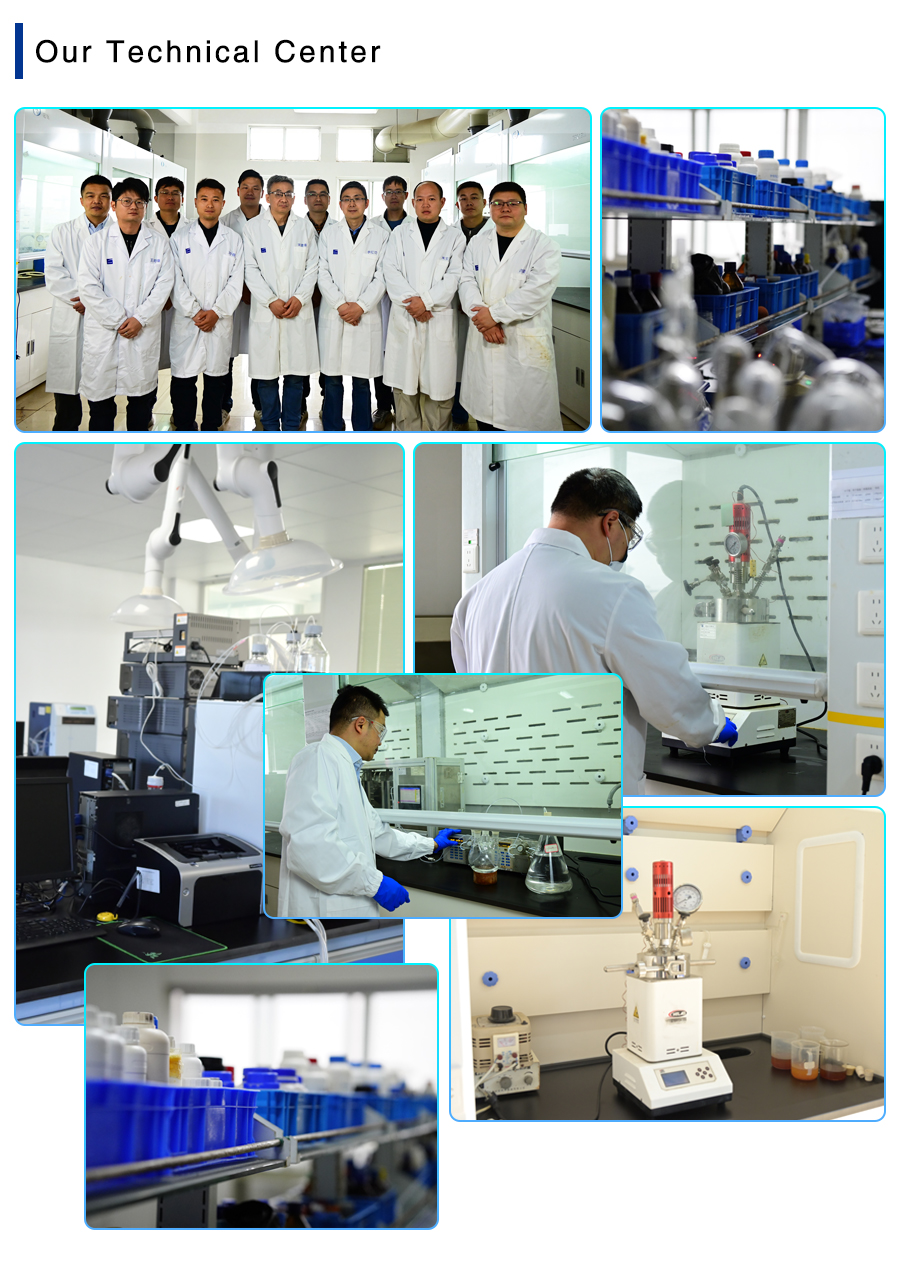
Process Engineering of Downstream Conversions
Scaling up bulk industrial transformations utilizing CAS No. 114776-15-7 requires precise management of reaction engineering parameters, stoichiometry, and thermal conditions:
Precision Nucleophilic Displacement Control
The initial nucleophilic substitution stage must be managed within narrow temperature boundaries to prevent the secondary displacement of the ortho-chlorine atom.
Solvent Tuning for Selective SNAr Transformations
The reaction is typically performed in dry polar aprotic solvents such as dimethyl sulfoxide or N,N-dimethylacetamide. These solvent matrices cleanly solvate incoming nucleophiles, ensuring rapid and complete conversion of the fluorine group while suppressing side reactions at the adjacent chlorine center.
Temperature-Ramped Stoichiometric Dosing Protocols
The incoming nucleophile is introduced via an automated metering system under a strictly controlled temperature ramp, usually held between 45°C and 60°C. This careful thermal regulation prevents exothermic spikes that can cause product degradation or induce unwanted decarboxylation pathways.
Catalytic Nitro Group Reduction Sequences
Following nucleophilic displacement, the nitro group at position 5 is frequently reduced to a primary amine to allow for subsequent heterocyclic ring closure.
Optimizing Heterogeneous Noble-Metal Hydrogenation
This reduction phase is efficiently executed using heterogeneous palladium or platinum catalysts supported on active carbon matrices under a pressurized hydrogen atmosphere. This catalytic approach ensures rapid, near-quantitative reduction without generating the vast iron-sludge waste streams associated with historical Bechamp reduction methods.
Managing Dehalogenation Side Pathways
A primary risk during noble-metal hydrogenation is the unintended removal of the ring-bound chlorine atom. EASTFINE’s high-purity intermediate allows engineers to apply optimized catalyst loadings and mild hydrogen pressures, ensuring complete nitro group reduction while preserving the integrity of the chlorine functional handle.
Industrial Handling, EHS, and Storage Optimization
Because 2-Chloro-4-fluoro-5-nitrobenzoic acid contains active nitro and halogen functionalities, industrial production facilities must strictly enforce comprehensive safety and storage protocols:
Advanced Airborne Dust Containment Systems
Bulk handling, drum splitting, and reactor charging procedures must utilize closed-loop powder transfer systems or laminar flow booths equipped with high-efficiency particulate air (HEPA) filtration. These measures protect operators from inhaling fine dust, preventing respiratory irritation and skin sensitization.
Corrosion-Resistant Process Vessel Engineering
Under prolonged exposure to moisture or elevated temperatures, multi-halogenated aromatic acids can undergo minor hydrolytic leaching, releasing trace amounts of acidic vapors. To prevent equipment degradation, all storage containers, charging hoppers, and transfer augers must be constructed from high-grade 316L stainless steel or lined with advanced fluoropolymer coatings.
Climate-Regulated Warehouse Logistics
Material inventory must be stored in cool, dark, well-ventilated, explosion-proof warehouses maintained strictly below 25°C. Drums should be positioned away from incompatible materials—such as strong reducing agents, heavy alkalis, or open ignition sources—to eliminate the risk of accidental exothermic decomposition loops.
Why Choose EASTFINE? Your Partner for Secure Commercial Scale-Up
When an advanced agrochemical asset or high-volume crop-protection molecule moves from laboratory development into multi-ton commercial production, choosing a dependable, direct intermediate manufacturer is vital. Established in 1995, EASTFINE is a premier global direct producer of high-purity 2-Chloro-4-fluoro-5-nitrobenzoic acid.
PhD-Backed Technical Expertise and Innovation
Our chemical synthesis lines are designed and continuously optimized by a specialized corporate R&D department led by process chemists holding doctoral degrees. This technical leadership has successfully secured 19 invention patents and 8 utility model patents focused on high-selectivity nitration and advanced aromatic stabilization chemistry. By optimizing our core processes, we deliver an intermediate that is consistently free of trace structural isomers, ensuring reliable down-stream yields.
Dual-Site Supply Assurance (Dalian & Heze)
In today's complex international regulatory landscape, relying on a single production point introduces significant operational risk. EASTFINE provides absolute supply security by operating two fully mirrored, large-scale production complexes in Dalian and Heze. This dual-site setup guarantees an uninterrupted supply of high-purity intermediates; if one plant undergoes scheduled maintenance or environmental audits, the sister facility can expand its output to seamlessly fulfill long-term commercial contracts.
Comprehensive Regulatory and Analytical Dossiers
Navigating strict agrochemical registration pathways requires absolute data transparency and robust analytical backing. EASTFINE accompanies every batch of CAS No. 114776-15-7 with a complete analytical package, including high-resolution liquid chromatography (HPLC) traces, precise melting point verifications, and detailed moisture measurements. Our rigorous quality control simplifies your raw material validation workflows, providing a clear auditing trail for global regulatory bodies.
Conclusion: Securing Agricultural Innovation through Purity
Achieving high active-ingredient output and dependable batch safety during commercial scale-up requires deep control over both chemical kinetics and structural purity. Inconsistent substitution configurations or trace positional isomer contamination in low-grade 2-Chloro-4-fluoro-5-nitrobenzoic acid (CAS No. 114776-15-7) can cause downstream reaction failures, low active-ingredient yields, and complex regulatory auditing challenges.
Partnering with EASTFINE provides your engineering team with an analytically verified, highly stable intermediate. Backed by thirty years of direct manufacturing authority, advanced proprietary intellectual property, and a highly secure dual-site production model, EASTFINE helps you build exceptionally clean, efficient, and regulatory-secure agrochemical manufacturing processes.


 English
 العربية
 Français
 Русский
 Español
 Português
 Deutsch
 italiano
 日本語
日本語 한국어
한국어 Nederlands
 Tiếng Việt
 ไทย
ไทย Polski
 Türkçe
 አማርኛ
አማርኛ ພາສາລາວ
 Bahasa Melayu
 ဗမာစာ
ဗမာစာ Filipino
 Bahasa Indonesia
 magyar
 Română
 Čeština
 қазақ
қазақ Српски
 हिन्दी
 فارسی
فارسی Kiswahili
 Slovenčina
 Slovenščina
 Norsk
Norsk Svenska
 українська
 Ελληνικά
 Suomi
Suomi עברית
עברית Dansk
Dansk اردو
اردو Shqip
Shqip বাংলা
বাংলা Hrvatski
 Gaeilge
 Eesti keel
 Oʻzbekcha
 latviešu
 Azərbaycan dili
 Български
 ქართული
 íslenska
 Lietuvių


 简体中文
简体中文


