Executive Summary: The Fallacy of "99% Purity"
In the global procurement of pharmaceutical intermediates, the industry standard has long been the "99% Purity" benchmark. However, as we navigate the high-stakes pharmaceutical landscape of 2026, a simple percentage on a Certificate of Analysis (COA) is no longer sufficient for comprehensive risk mitigation. As global regulatory bodies—including the FDA, EMA, and NMPA—tighten their requirements for Genotoxic Impurities (GTIs) and Elemental Impurities (ICH Q3D), the definition of "quality" has evolved from a single number to a multi-dimensional data set.
For a complex, reactive building block like Cyclopentanecarbaldehyde (CAS 872-53-7), the "remaining 1%" is where the most significant operational and regulatory dangers reside. Unidentified trace isomers, residual catalysts, or degradation byproducts do not merely represent "filler" material; they are active chemical entities that can interfere with sensitive catalytic cycles, cause "ghost peaks" in final drug testing, or trigger a "Refuse to Receive" (RTR) letter from health authorities. This technical briefing explores how EASTFINE’s Impurity Profiling goes beyond the standard COA to provide a "molecular fingerprint" of our April Star Product, ensuring the highest possible yields and regulatory safety for your generic antiviral and cardiovascular portfolios.
The Chemistry of the "Remaining 1%"
When a 3rd-party trader offers CAS 872-53-7 at 99% purity, they are typically reporting the "Area Percentage" derived from a basic Gas Chromatography (GC) scan with a Flame Ionization Detector (FID). While FID is excellent for quantifying carbon-containing molecules, it is "blind" to the identity of those molecules. In the case of alicyclic aldehydes, the impurities are often reactive, migratory, and structurally similar to the target product.
The "Ghost Peak" Problem: Structural Isomers
During the industrial synthesis of Cyclopentanecarbaldehyde, trace amounts of isomeric aldehydes or unsaturated analogs (such as cyclopent-1-enecarbaldehyde) can be formed during the formylation or dehydrogenation stages.
The Technical Risk:
These isomers often possess boiling points within 1–2°C of the target molecule, making them nearly impossible to remove via standard atmospheric distillation. If these isomers carry through into your API synthesis—such as a Reductive Amination step—they will create "analog impurities" in your final drug substance.
The Downstream Consequence:
These impurities are chemically almost identical to your final API, meaning they cannot be purged during standard crystallization or chromatography. They appear as "ghost peaks" during your final QC release, potentially pushing your API out of the allowed 0.10% individual impurity limit.
The EASTFINE Solution:
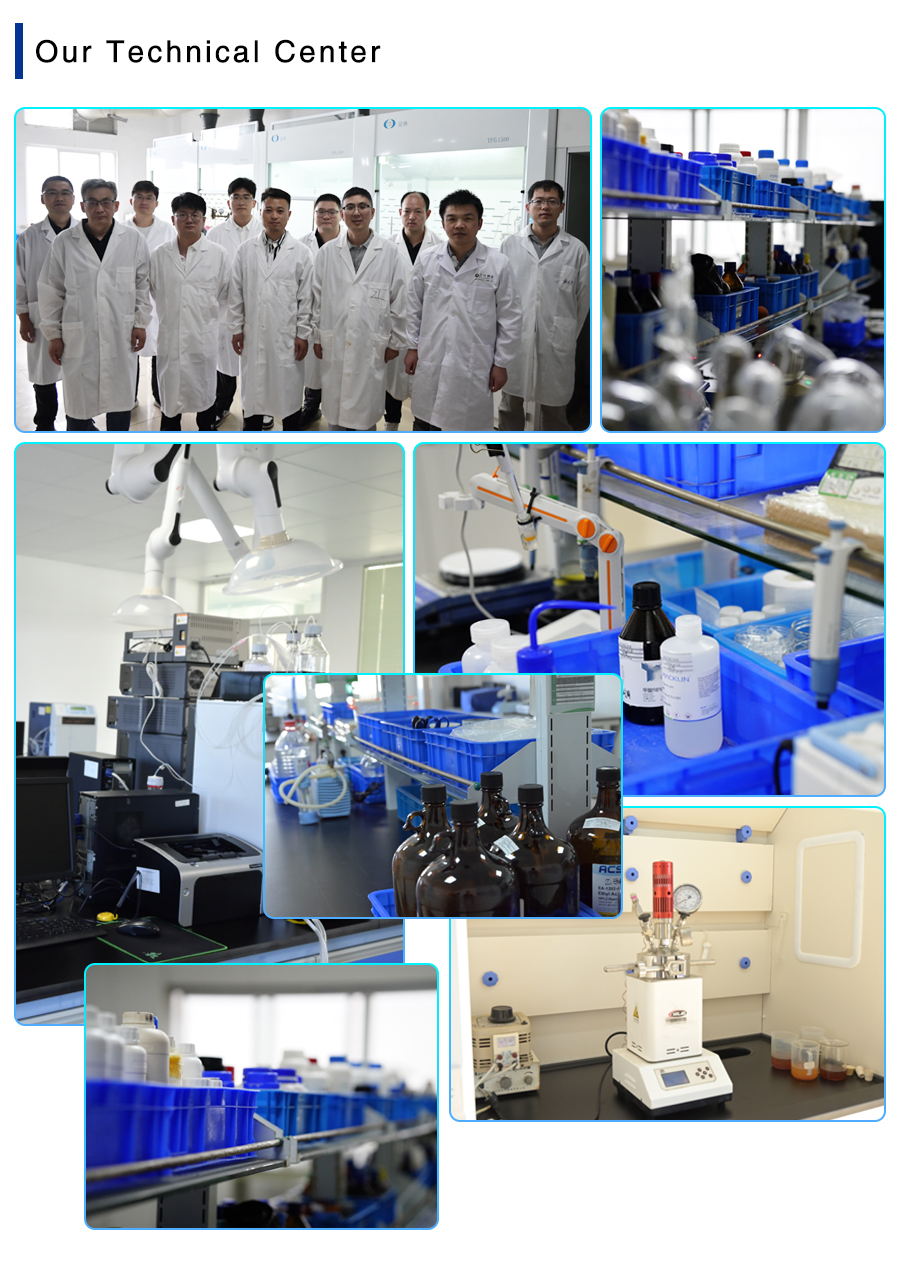
We utilize High-Resolution GC-MS (Gas Chromatography-Mass Spectrometry) to "fingerprint" every batch. By identifying the mass-to-charge ratio of every trace peak, we identify these isomers and adjust our fractional distillation reflux ratios to suppress them below 0.05%, far exceeding the standard 0.5% "unidentified" allowance.
Residual Precursor Alcohols: The Chain Terminators
The precursor to CAS 872-53-7 is typically Cyclopentylmethanol. In high-volume production, if the conversion is not 100% efficient, residual alcohol remains.
The Risk:
In reactions such as Wittig couplings or Horner-Wadsworth-Emmons (HWE) olefination, residual alcohols act as "protic poisons." They deprotonate expensive organometallic reagents (like n-butyllithium or sodium hydride), leading to a complete failure of the coupling reaction.
The Operational Impact:
This leads to erratic yields, where one batch of CAS 872-53-7 performs well, but the next "99% pure" batch from a trader results in a 30% yield drop.
The EASTFINE Solution:
Our specialized COAs provide a specific limit for Residual Precursor Alcohol, typically kept below 0.05%, ensuring that your expensive reagents are used for synthesis, not for quenching impurities.
Deep-Dive—Analytical Methodology (GC-FID vs. GC-MS)
To provide the "Beyond the COA" transparency our B2B partners require, EASTFINE has invested heavily in dual-track analytical validation. It is important for procurement teams to understand the difference between the two, as it directly impacts the reliability of the data.
GC-FID: The Quantitative Workhorse
Gas Chromatography with Flame Ionization Detection is the standard for purity quantification. It works by burning the sample in a hydrogen flame, which creates ions that are measured as current.
Strength:
Excellent linearity and high sensitivity for carbon-containing compounds.
Weakness:
It provides no structural information. It tells you how much is there, but not what it is. If two different impurities co-elute (come out of the column at the same time), the FID will see them as one single peak, leading to a false sense of purity.
GC-MS: The Qualitative Fingerprint
Gas Chromatography paired with Mass Spectrometry allows us to fragment each peak as it leaves the column and measure the mass of the fragments.
The EASTFINE Standard:
We use GC-MS during the Validation Phase of every April Star Product production run. This allows us to confirm that the "99%" measured by the FID is actually 99% pure Cyclopentanecarbaldehyde and not a mixture of the product and a co-eluting isomer.
B2B Benefit:
We provide actual GC-MS chromatograms to our long-term partners. This data is invaluable when you are defending the "Identity" of your starting materials during a pre-approval inspection (PAI).
The Regulatory Shield—Meeting ICH M7 and Q3D
In 2026, the burden of proof for intermediate purity has shifted. Global health authorities now expect drug manufacturers to have "Deep Knowledge" of their supply chain.
Genotoxic Impurity (GTI) Risk Assessment (ICH M7)
Under ICH M7 guidelines, any intermediate used in the late-stage synthesis of an API must be screened for mutagenic potential. Because aldehydes are reactive electrophiles, they are inherently "flagged" by regulatory software (like Derek or Sarah) as potentially genotoxic.
The DFM Advantage:
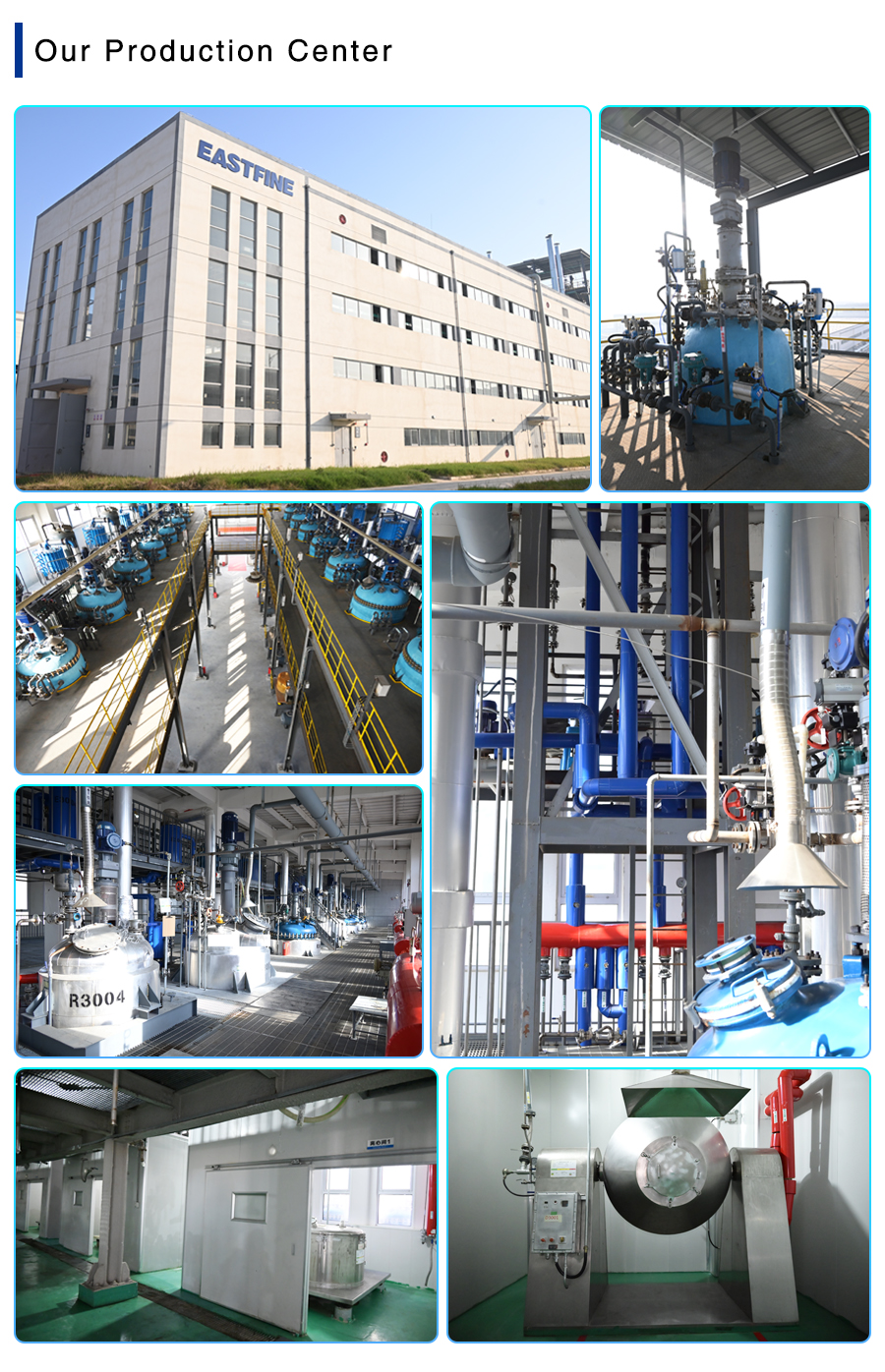
Because EASTFINE is the primary manufacturer, we possess the complete Process History. We know exactly which catalysts, solvents, and temperature profiles were used. We provide our B2B partners with a Formal GTI Risk Assessment Package, which includes experimental data proving that our specific impurity profile does not pose a mutagenic risk. This saves your regulatory team months of forensic chemistry and toxicological assessment.
Elemental Impurities (ICH Q3D)
3rd-party traders often use shared, multi-purpose storage tanks that can lead to cross-contamination of heavy metals such as Palladium (Pd), Platinum (Pt), or Nickel (Ni).
The Risk:
These metals are not just toxic; they are reactive. Trace nickel in your CAS 872-53-7 can catalyze the premature decomposition of your API or cause discoloration (pinking/yellowing) of the final powder.
The EASTFINE Integrity:
Our dedicated CAS 872-53-7 production line utilizes only high-grade stainless steel and glass-lined reactors. We conduct regular ICP-MS (Inductively Coupled Plasma Mass Spectrometry) screening. We guarantee that elemental impurities are well below the parts-per-billion (ppb) level, ensuring your final drug product remains stable and white.
Case Study—The Cost of "Silent" Catalyst Poisoning
To illustrate the importance of looking "Beyond the COA," let us examine a real-world scenario frequently encountered in the generic antiviral sector.
The Scenario:
A generic manufacturer was synthesizing a next-gen antiviral using a Reductive Amination pathway. They sourced CAS 872-53-7 from a trader who provided a COA claiming 99.2% purity. However, the final API yield was consistently 15% lower than the pilot-plant expectations.
The Investigation:
EASTFINE’s technical team was brought in to analyze the "failed" batches. Using our advanced impurity profiling, we discovered that the trader’s material contained 0.4% Cyclopentanecarboxylic acid and trace residual sulfur-containing compounds from the trader’s poorly cleaned shipping containers.
The Result:
Acid Interference:
The carboxylic acid was protonating the amine substrate, slowing the imine formation and leading to incomplete reactions.
Catalyst Deactivation:
The trace sulfur was "poisoning" the expensive Palladium-on-Carbon (Pd/C) catalyst used in the reduction step, requiring the manufacturer to increase catalyst loading by 20% to compensate.
Economic Loss:
The manufacturer was losing $45,000 per batch in lost yield and increased catalyst costs.
The Switch to EASTFINE:
Upon switching to EASTFINE’s April Star Product, which features an acid value of <0.1% and guaranteed sulfur-free processing, the manufacturer saw yields return to 98% of theoretical, saving over $500,000 in a single production campaign.
Protecting Downstream Kinetics—The Acidity & Moisture Factor
While "purity" is a general term, B2B performance is dictated by specific physical-chemical parameters: Acidity and Moisture.
Potentiometric Titration for Acid Value
As an aldehyde, CAS 872-53-7 is in a constant battle with oxygen. Even in a sealed drum, trace headspace oxygen can initiate auto-oxidation.
The Impact:
Most standard COAs do not report an "Acid Value." However, for many antiviral syntheses, the acid is a more dangerous impurity than an isomer.
The EASTFINE Protocol:
We utilize Potentiometric Titration to provide a precise acid value on every batch. By utilizing proprietary pharmaceutical-grade inhibitors and nitrogen-blanketed filling, we keep the acid value below 0.1%.
Karl Fischer (KF) Titration for Moisture
Standard "99%" purity often ignores water content, as many GC detectors do not quantify water well.
The Risk:
Many modern antiviral syntheses use anhydrous conditions or Lewis Acid catalysts (like TiCl4 or AlCl3). Even 0.2% water in your intermediate can deactivate these catalysts, leading to "clumping" in the reactor and failed stirring.
The EASTFINE Guarantee:
We use Karl Fischer Titration for every "April Star" batch, guaranteeing moisture levels ≤ 0.05%. This level of "Bone-Dry" quality is essential for high-throughput, automated pharmaceutical plants.
Supply Chain Sovereignty and ESG (The 2026 Mandate)
Sourcing based on an impurity profile rather than just a price point is a strategic decision that affects the Total Cost of Ownership (TCO). In 2026, this also includes your company's Environmental, Social, and Governance (ESG) standing.
The Carbon Footprint of Purity
Traders often source "cheap" material from factories using outdated stoichiometric oxidants (like Chromium or Permanganate-based processes). These methods produce high levels of toxic heavy-metal sludge.
EASTFINE’s Green Synthesis:
Our 2026 production of CAS 872-53-7 utilizes Gas-Phase Catalytic Dehydrogenation. This is a "clean" reaction that produces only the aldehyde and hydrogen gas as a byproduct.
The B2B Benefit:
By sourcing from EASTFINE, your procurement team can claim a Scope 3 Carbon Reduction, as our process is significantly more sustainable than traditional 20th-century methods. We provide Carbon Footprint Certificates for every multi-ton order.

Direct Manufacturer Resilience
In a peak generic surge, a trader is a "middleman" who can be bypassed. If a trader's sub-supplier fails an audit, the trader has no product.
The DFM Advantage:
When you partner with EASTFINE, you are partnering with the physical plant. We have 15 tons of reserved capacity specifically for the antiviral sector this April. This eliminates the risk of "stock-out" notices that are common in the secondary market.
Why "Impurity Profiling" is a B2B Business Asset
Ultimately, the technical data we provide is a business tool designed to improve your ROI.
Zero Incoming QC Rejections:
When your material is "fingerprinted" and consistent, your internal QC rejection rate drops to near zero, saving time and storage space.
Accelerated R&D-to-Production:
With our comprehensive technical packages, your process chemists don't have to "guess" how the material will behave. They can move directly into validation batches.
Audit Confidence:
When a regulatory inspector asks for the "impurity profile of the starting intermediate," you won't have to wait 2 weeks for a trader to call a factory. You will have the EASTFINE Technical Dossier already in your files.
Conclusion: Purity is a Strategy, Not a Number
In the hyper-competitive 2026 pharmaceutical market, being "First to Market" is only half the battle. Staying in the market requires a drug product that is safe, stable, and produced with consistent, high-yielding chemistry.
Cyclopentanecarbaldehyde (CAS 872-53-7) is the foundation upon which your antiviral or cardiovascular API is built. By looking "Beyond the COA" and partnering with EASTFINE, you are securing a supply chain defined by transparency, technical depth, and industrial resilience. Don't settle for "99%." Demand the molecular fingerprint that protects your yields, your reputation, and your bottom line.
Ready to bypass the "middleman" and secure your 2026 supply?
Contact the EASTFINE Strategic Sourcing Team today to request a Sample Technical Package and our April 2026 Inventory Allocation Schedule. Let us show you how our "April Star" CAS 872-53-7 can optimize your next production campaign.


 English
 العربية
 Français
 Русский
 Español
 Português
 Deutsch
 italiano
 日本語
日本語 한국어
한국어 Nederlands
 Tiếng Việt
 ไทย
ไทย Polski
 Türkçe
 አማርኛ
አማርኛ ພາສາລາວ
 Bahasa Melayu
 ဗမာစာ
ဗမာစာ Filipino
 Bahasa Indonesia
 magyar
 Română
 Čeština
 қазақ
қазақ Српски
 हिन्दी
 فارسی
فارسی Kiswahili
 Slovenčina
 Slovenščina
 Norsk
Norsk Svenska
 українська
 Ελληνικά
 Suomi
Suomi עברית
עברית Dansk
Dansk اردو
اردو Shqip
Shqip বাংলা
বাংলা Hrvatski
 Gaeilge
 Eesti keel
 Oʻzbekcha
 latviešu
 Azərbaycan dili
 Български
 ქართული
 íslenska
 Lietuvių


 简体中文
简体中文


